









Online Presence
Hourly vs Fixed Web Design Pricing: How to Choose in 2026
22
Jan
Jan
Hourly vs Fixed Web Design Pricing: How to Choose in 2026
When hiring a freelance web designer, one of the biggest questions is:
“Should I pay hourly or go with a fixed price?”
Both options are common, but choosing the right pricing model can save you money, reduce stress, and make the project smoother.
This guide explains the differences between hourly and fixed pricing, what to expect in 2026, and how to decide which is best for your website project — all in plain English.
By the end, you’ll understand:
-
The difference between hourly and fixed pricing
-
Pros and cons of each model
-
How pricing models affect cost, timeline, and revisions
-
Tips for choosing the right model for your project
Plus, we’ll link back to the pillar post for a full guide on hiring a freelance web designer: How to Hire a Freelance Web Designer: Costs, Process & What to Expect in 2026.
Quick Overview: Hourly vs Fixed Pricing
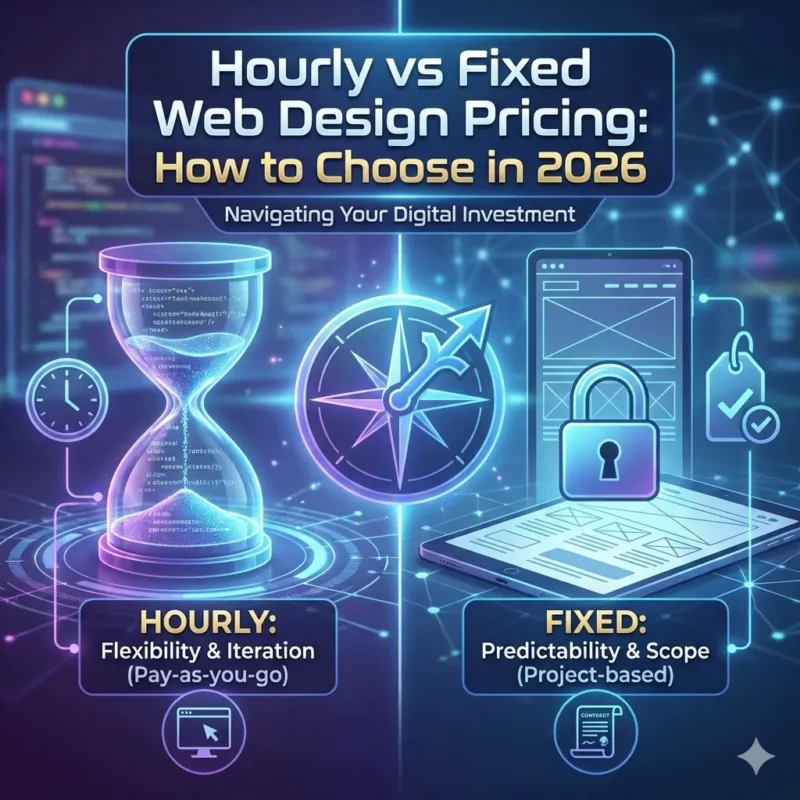
| Pricing Model | What It Means | Pros | Cons |
|---|---|---|---|
| Hourly | You pay for every hour the freelancer works | Flexible, good for ongoing tweaks | Total cost can be unpredictable, may take longer |
| Fixed / Project-Based | You pay a set price for the whole project | Easier to budget, clear deliverables | Less flexible, scope changes can cost extra |
Hourly Pricing Explained
Hourly pricing is often used when:
-
The project is open-ended or ongoing
-
You’re not sure exactly how much work is needed
-
Changes may happen frequently
Pros:
-
Flexible scope
-
Easier for ongoing updates or maintenance
Cons:
-
Hard to predict final cost
-
Can feel stressful if hours pile up
💡 Pro Tip: Always ask for an estimate of total hours before starting.
Fixed / Project-Based Pricing Explained
Fixed pricing is common when:
-
The project scope is clearly defined
-
You want a clear budget upfront
Pros:
-
You know exactly how much you’ll pay
-
Easier to plan your launch and budget
Cons:
-
Scope changes may incur extra fees
-
Less flexible if new ideas come up mid-project
💡 Pro Tip: Make sure the contract clearly lists what’s included, revision limits, and timeline.
How to Decide Which Model is Right for You
-
Small or simple projects: Fixed pricing often works best
-
Ongoing work or open-ended projects: Hourly may be better
-
Budget constraints: Fixed pricing is easier to manage
-
Timeline considerations: Fixed pricing can help ensure deadlines are met
-
Communication style: Hourly works well if you provide frequent feedback and updates
FAQ Section: Hourly vs Fixed Pricing
What is hourly pricing for web design?
You pay for each hour the freelancer works. Flexible, but the total cost can vary depending on project scope and revisions.
What is fixed/project-based pricing?
You pay a set price for the entire project. Easier to budget and plan, but changes may cost extra.
Which model is better for small projects?
Fixed pricing is usually better for small or clearly defined projects because it’s easier to manage your budget.
Which model is better for ongoing work?
Hourly pricing works well for ongoing updates, maintenance, or projects with uncertain scope.
How can I avoid surprises with either model?
Get a clear contract, define deliverables, set revision limits, and communicate regularly with your freelancer.
Does pricing affect project timeline?
Yes. Fixed pricing usually comes with a set timeline, while hourly projects can stretch if scope isn’t clearly defined.
For the full walkthrough of hiring a freelance web designer — including costs, timelines, and red flags — visit:
How to Hire a Freelance Web Designer: Costs, Process & What to Expect in 2026
